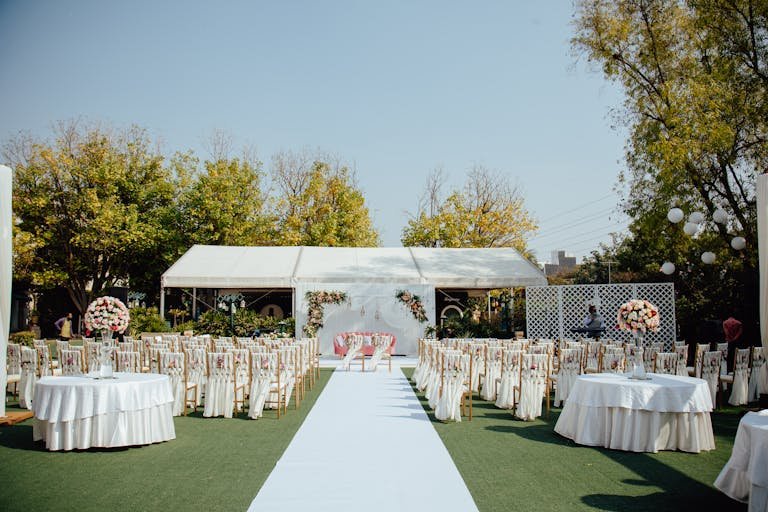
A venue can look perfect in photographs and still be wrong for the event you are planning. The problem usually appears in details the camera does not show: the gate where several cars arrive together, the distance an elderly relative has to walk, the caterer crossing the guest entrance with trays, a stage that blocks circulation, or an outdoor plan with nowhere sensible to move if the weather changes.
Choosing an event venue should therefore begin with the event itself, not the décor. A suitable property makes the guest journey easier, gives vendors room to work and leaves fewer surprises for the host. This guide explains how to choose an event venue in Pakistan using practical selection criteria rather than photographs alone.
For the wider process — including budget, guest planning, accommodation, vendors and event-day operations — use the event planning in Pakistan pillar guide.
A Better Venue Shortlist Starts in This Order
Six decisions that remove unsuitable properties before you waste time on site visits.
Purpose
What must the event achieve?
Guest count
What layout feels comfortable?
Location
How will guests actually arrive?
Event flow
Can people move without bottlenecks?
Operations
Can vendors, power and service work?
Terms
What is included, restricted and refundable?
Start With the Event You Are Actually Planning
Before opening venue listings, write one sentence that describes a successful event. The sentence should be specific enough to rule properties in or out.
“A comfortable nikkah for around 100 guests, with seated lunch, easy access for elderly relatives, a private preparation room for close family and a practical weather backup” gives you a much stronger brief than “an elegant family event.”
A corporate organizer might need a full-day leadership session with presentation space, reliable power, lunch service, parking and a quieter area for smaller discussions. The visual style can be decided later. At the shortlisting stage, the job is to protect the purpose of the event.
This is the first venue selection criterion: can the property support what the event needs to achieve without forcing major compromises?
Set a Realistic Guest Count Before Comparing Capacity
Capacity is often treated as one number, but an event needs more than floor area for guests. Seating, a stage or ceremony area, dining, décor, photography, vendor movement and clear walkways all consume usable space.
- Guest seating or standing zones
- Stage, ceremony or presentation area
- Buffet, plated service or private dining
- Clear walkways and circulation
- Photography and videography movement
- Décor structures and technical equipment
- Family, organiser or preparation rooms
- Kitchen, service and emergency access
Ask for the comfortable capacity for your intended layout, not only the highest advertised occupancy. A lawn that works for a standing reception may feel cramped once a stage, round tables and buffet service are added. The same rule applies to corporate events: a room may hold everyone but still fail if sightlines and aisles are poor.
See how guest count changes the venue shortlist.
Explore current properties only after your outcome,guest range and operating window are clear
Choose the Location Around Your Guests
A convenient venue is not simply the property closest to the host. Think about where most guests are coming from, how they will arrive and what the journey looks like at the actual event time.
In urban areas, traffic patterns, parking and the walk from drop-off to the event area can matter more than distance on a map. For private villas and farmhouses outside familiar commercial areas, accurate map pins, visible entrances and simple landmarks become part of the guest experience. For intercity groups, access from a motorway or major route may be more useful than a central address.
Location should reduce friction for the people attending the event. If the property is difficult to find, difficult to enter or difficult to leave when several cars move at once, that inconvenience belongs in the venue comparison.
Evaluate the Guest Journey From Arrival to Departure
One of the fastest ways to expose a weak venue is to stop looking at it as a photograph and walk through it as a guest.
Start at the road. Where does the car turn in? Where does it stop? Can an older guest step out close to the entrance? What happens when several cars arrive within ten minutes? Then follow the route into the property. Is the welcome point obvious? Can people reach the main area without crossing vendor setup or catering movement? Are restrooms easy to find? Is there a prayer space if the event needs one?
Continue until departure. If caterers are clearing equipment while guests are leaving, do the routes conflict? If the event moves from a ceremony to dining, does the transition feel natural or does everyone squeeze through one narrow point?
Good event flow is almost invisible when it works. Poor flow becomes obvious very quickly.
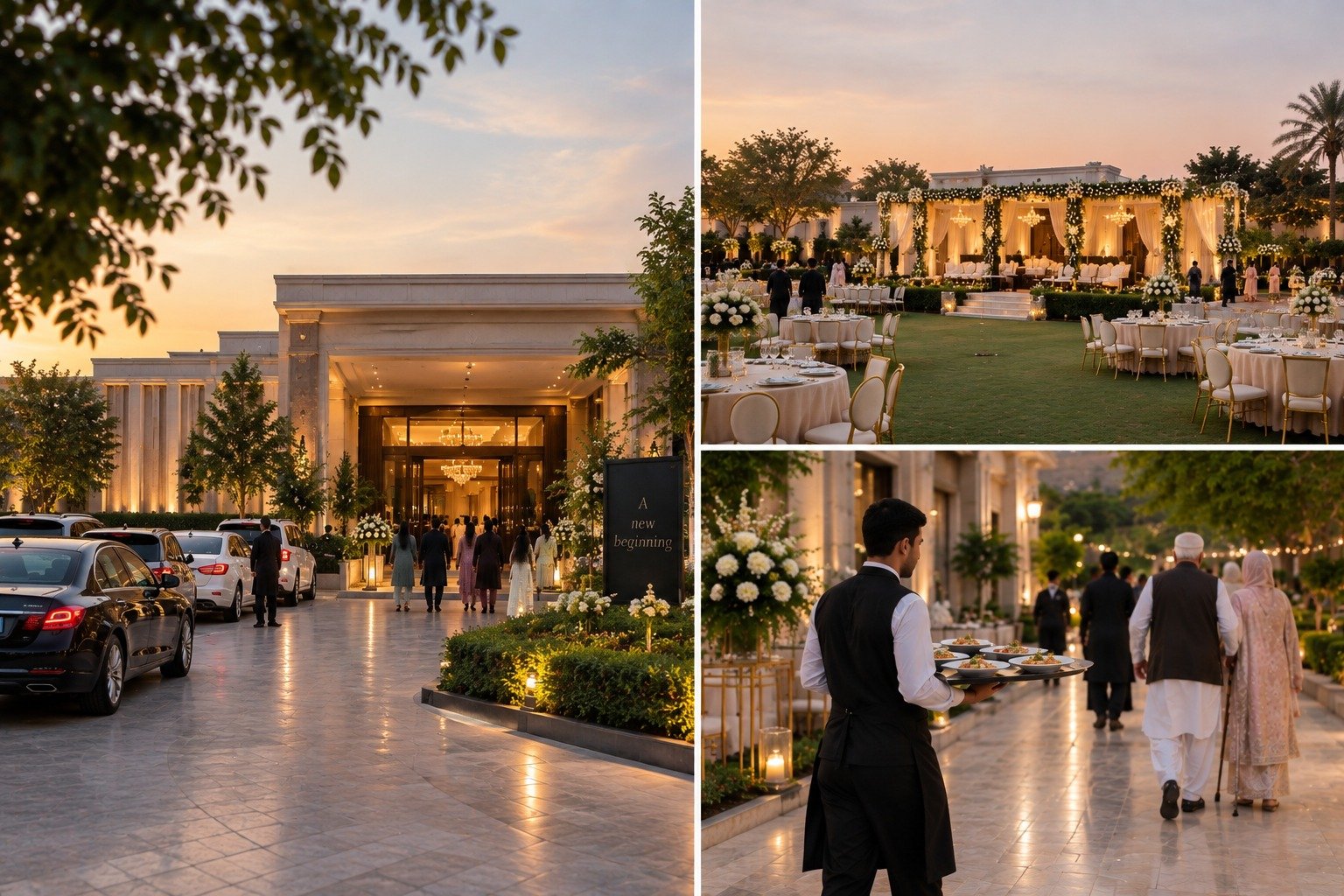
Choose by Event Flow — Not Photos Alone
A good-looking property must also work from arrival to departure.

 VISUAL APPEAL
- Architecture
- Atmosphere
- Photo backdrop
 PRACTICAL FLOW
- Arrival & parking
- Guest movement
- Service access
- Weather backup
Think About Guests Who Need More Than a Chair
Families may have elderly relatives, young children or guests with limited mobility. Corporate events may include senior executives, speakers or attendees who need a quieter space. Wedding functions may require private preparation rooms for close family.
During a site visit, look at steps, slopes, lawn surfaces, pathway lighting, restroom access and the distance between important areas. A ramp at the main entrance is helpful, but it does not solve a difficult lawn surface or a staircase leading to the only family room.
The better question is not “Is the venue accessible?” It is “Can the guests who need additional support move through the complete event comfortably?”
Compare Venue Types by Function, Not Status
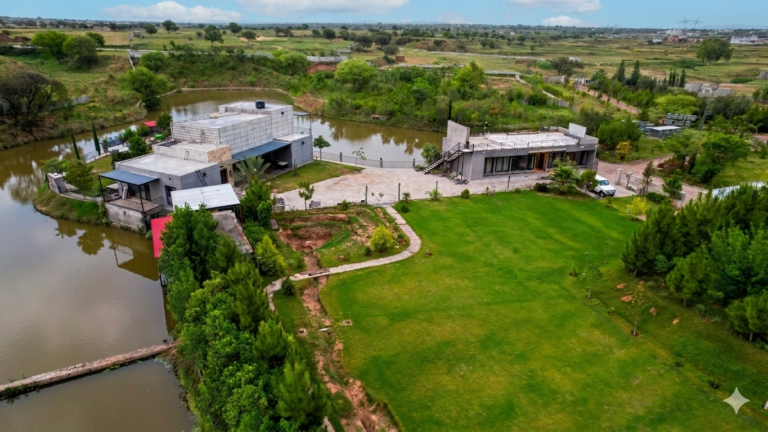
Different venue types solve different planning problems. A private villa is not automatically better than a farmhouse, and a lawn is not automatically better than a banquet hall. Compare the operating strengths of each setting against the event brief.
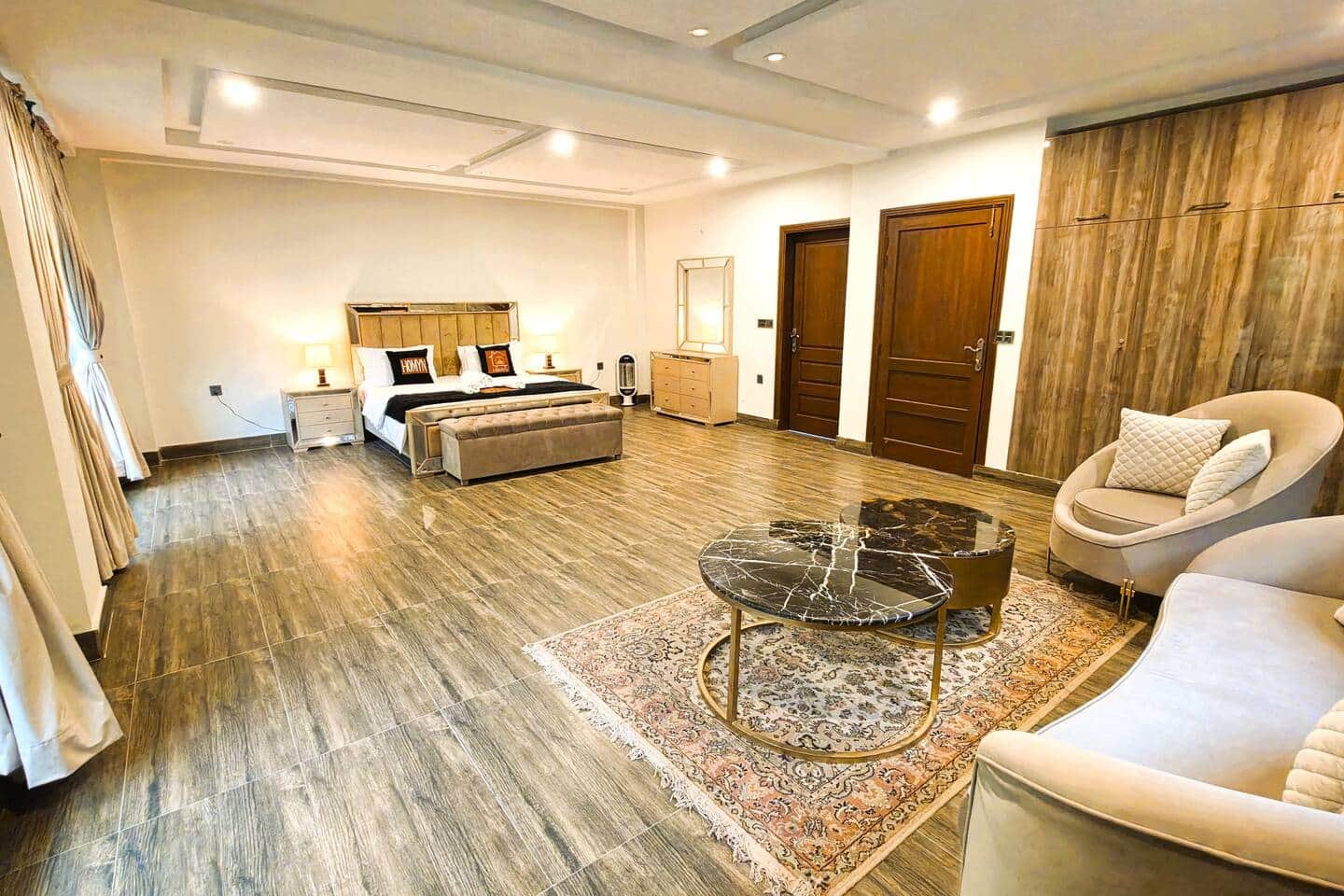
Private villas
Private villas can work well for intimate weddings, nikkahs, birthdays, family dinners, leadership meetings and events where privacy or connected indoor and outdoor spaces matter. They may also provide preparation rooms or overnight accommodation. Parking, neighbourhood rules, guest circulation and external-vendor permissions still need to be checked.
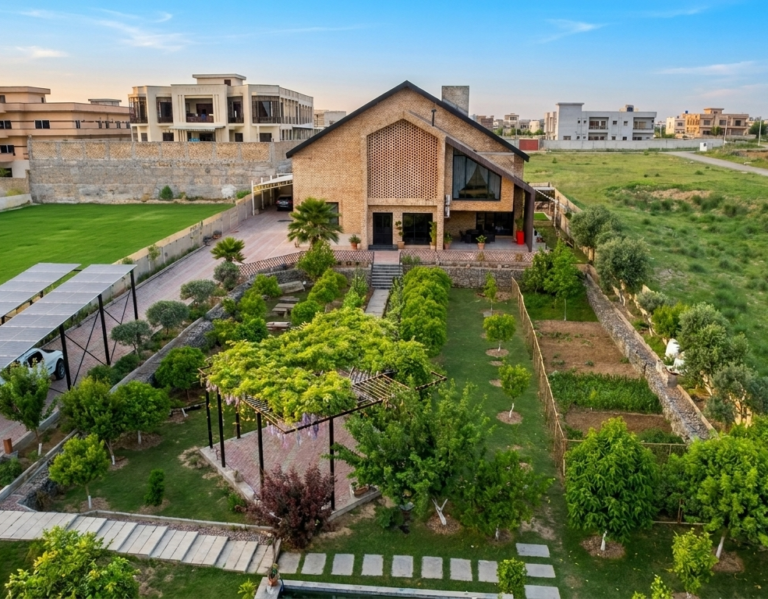
Farmhouses and private lawns
Farmhouses and lawns can offer more freedom for outdoor layouts, children’s activities, décor structures and larger gathering zones. They also place more pressure on weather planning, flooring, lighting, restrooms, power, parking and the distance between the kitchen and guest area.
Heritage and architectural properties
A distinctive building can create atmosphere without heavy decorative intervention. That can suit private dinners, styled celebrations and brand events. In return, organisers may need stricter rules around drilling, hanging installations, loading, furniture movement or heavy production equipment.
Banquet halls and hotels
Halls and hotels can be practical where indoor predictability, central access, climate control and built-in service infrastructure matter most. The trade-off may be less privacy or less flexibility, depending on the property and its vendor policies.
Which Property Type Fits Your Event?
Compare privacy, guest count, event style and operations.
 HERITAGE HOME
Built-in Character
Suitable for intimate weddings, executive dinners and styled shoots.
VIEW RETREAT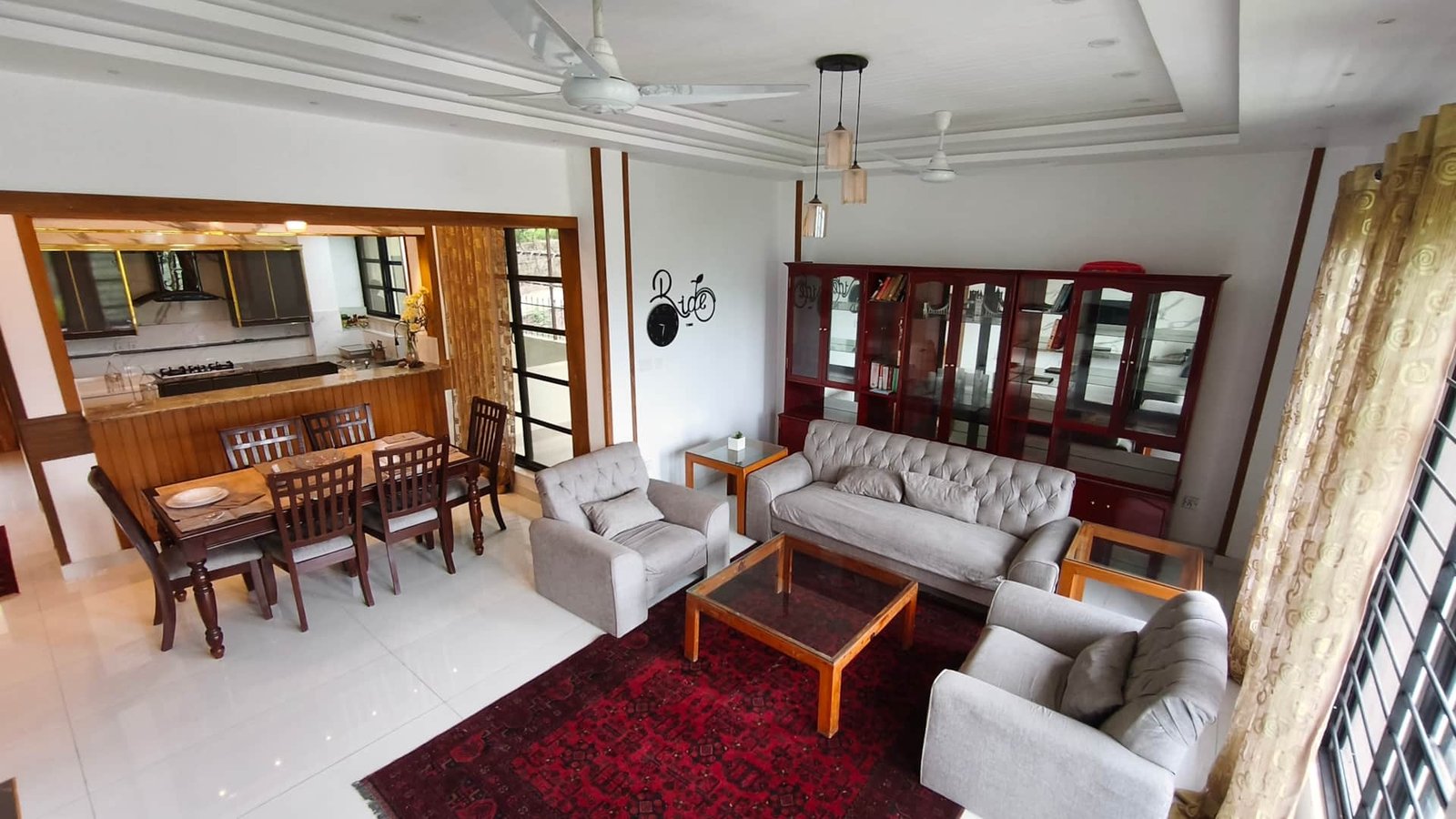 PRIVATE VILLA
Indoor + Outdoor Flexibility
Useful for nikkahs, birthdays, family events and private retreats.
BOOK PRIVATE VILLA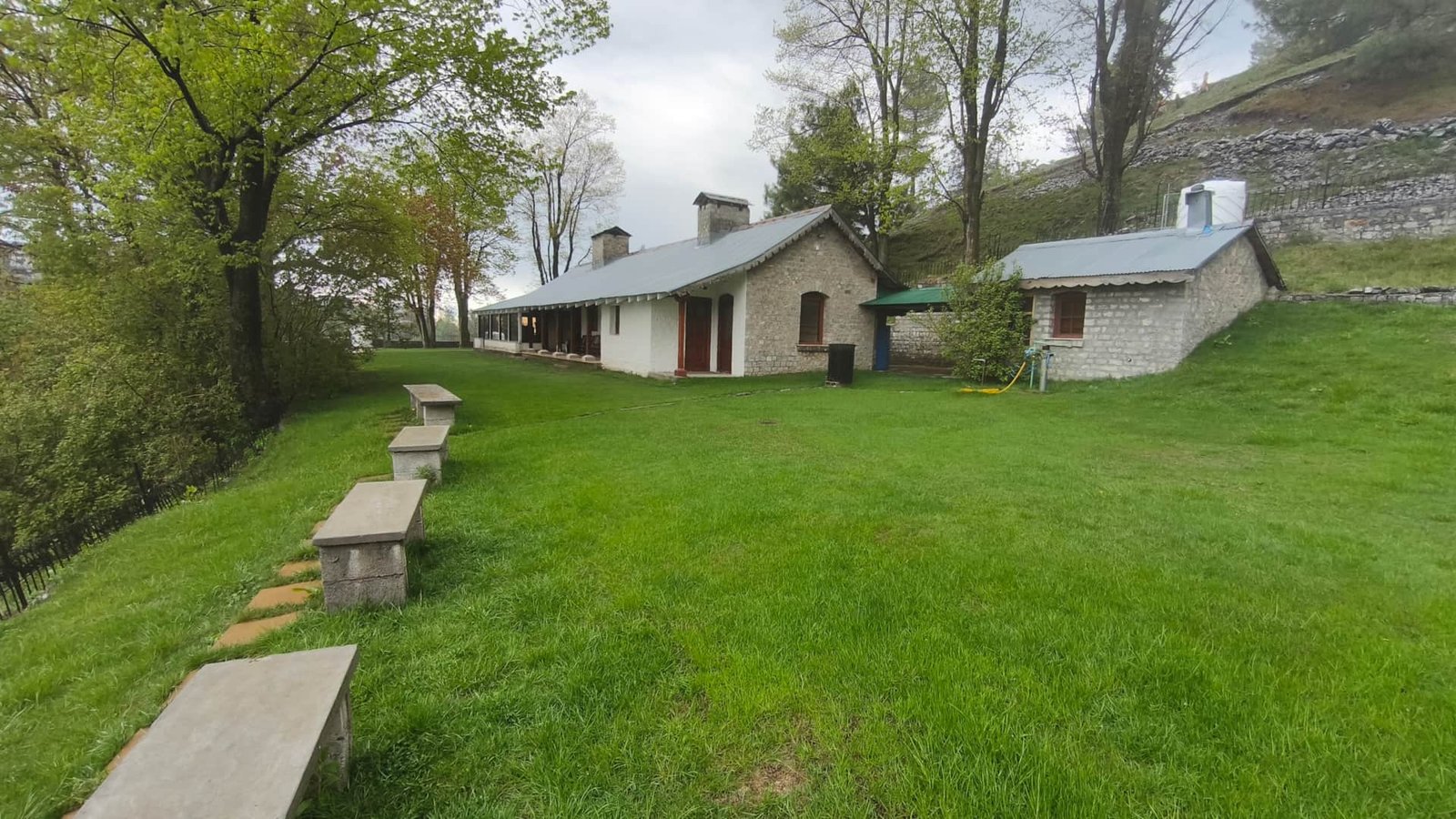 FARMHOUSE & LAWN
Check Parking Before You Fall in Love With the Lawn
Parking is easy to ignore during a quiet daytime visit. It becomes a real operating issue when dozens of cars arrive in a short window.
Ask where vehicles will actually park, not simply whether “parking is available.” Estimate how many cars your guest mix is likely to generate. Check turning space, drop-off, valet needs, vendor vehicles and whether parked cars could block a road or neighbouring property.
For family events, a close drop-off point may matter more than a large parking field. For corporate events, staff vehicles, speaker transport and vendor loading may need separate consideration.
Inspect the Service Route, Not Only the Guest Entrance
Guests and vendors should not have to use the same route for everything. Caterers move food, crockery and waste. Decorators bring structures and furniture. Technical teams unload speakers, screens and cables. Photographers need room to move without becoming part of the traffic problem.
During the walkthrough, ask where suppliers unload, whether larger vehicles can approach the property, how far the kitchen is from the guest area and where waste leaves the venue. A property that feels spacious when empty can become congested once event infrastructure arrives.
Confirm Power, Sound, Lighting and Connectivity
Technical requirements vary by event. A family lunch may need little more than dependable electricity and basic sound. A product launch can depend on microphones, screens, lighting, photography equipment, Wi-Fi and uninterrupted power.
Do not stop at “there is a generator.” Ask what electrical load the property can support, what the backup covers, how quickly it activates and where power points are located. If Wi-Fi matters, test it in the exact area where guests or organizers will use it.
For speeches or presentations, stand in different parts of the proposed seating area and check sightlines. For evening events, inspect pathways and parking after dark if possible. Decorative lighting is not the same as safe functional lighting.
Ask About Vendor Rules Before Paying Anyone
Venue rules can affect catering, décor, photography, sound and production. Before making non-refundable commitments to suppliers, confirm what the property allows.
- Outside catering and on-site cooking
- Open flame, barbeque or heating equipment
- Drilling, wall attachments and hanging installations
- Amplified music and event end times
- Generators, speakers, LED screens and production equipment
- Large furniture, temporary structures and lawn protection
- Late-night setup, breakdown and vendor access
Do not assume a private property automatically allows more flexibility than a banquet hall. Policies vary by property. If a specific vendor requirement is essential to the plan, get that permission in writing.
Build the Weather Plan Before Choosing an Outdoor Venue
An outdoor event plan should answer more than “What if it rains?” Heat, wind, wet grass, cold evenings, unstable flooring and exposed technical equipment can all change the guest experience.
Ask where guests will move if the outdoor setup becomes unusable and whether that space can actually accommodate the same event. A small lounge is not a genuine weather backup for a large lawn function. Decide who can activate the backup plan and how long a layout change would take.
A contingency is only useful when space, equipment and authority are arranged before the event day.
Treat Overnight Accommodation as a Separate Capacity
A private villa or farmhouse may host a gathering and also provide bedrooms, but those are two different capacities. Do not combine them.
If guests will stay, confirm the number of usable bedrooms, bed configuration, bathrooms, check-in and check-out times, housekeeping, kitchen access, driver accommodation, parking and quiet-hour rules. This becomes especially important for multi-day weddings, out-of-city family gatherings and corporate retreats.
Where accommodation is part of the plan, Stay with Homyn can be used to compare current stay options separately from the event-capacity decision.
Compare the Total Venue Cost, Not Only the Rental Price
Two properties with different headline prices can become much closer once operating costs are added. Compare quotations on the same basis
- Complete access period, including setup and breakdown
- Cleaning and housekeeping
- Security and traffic management
- Generator or additional electricity use
- Furniture, rooms or equipment not included in the base rate
- Outside-vendor or service charges
- Overtime, taxes and breakage or security deposits
The purpose of this comparison is not to choose the cheapest property. It is to understand the real cost of making the venue work for the event you are planning.
Run the Site Visit Like an Inspection
A site visit should confirm how the property works, not merely whether you like it. Walk through the venue in the same sequence the event will operate.
- Approach from the road and check the location pin, landmarks and turning space.
- Inspect parking and the guest drop-off area.
- Walk through the main entrance as a guest would.
- Stand where the stage, ceremony or screen will go and check sightlines.
- Walk the catering and vendor route from loading to service.
- Locate restrooms, prayer space, family rooms and any accommodation.
- Check power points, backup power, weather backup and the final exit route.
If you are planning remotely from outside Pakistan, ask for a live video walkthrough that follows the same route. Edited reels are useful for atmosphere; they are not an operational inspection.
Run the Site Visit Like an Inspection
Follow the event journey in sequence — road to departure — and inspect what photographs cannot show.
Approach road
Pin, landmarks, turning space
Parking & drop-off
Arrival pressure, elderly access
Guest entrance
Security, welcome, bottlenecks
Main event area
Layout, sightlines, walkways
Service route
Kitchen, loading, waste, vendors
Power & backup
Electrical load, sound, weather
Rooms & exit
Restrooms, family rooms, departure
Use a Simple Venue Comparison Scorecard
hen several properties look suitable, compare them using the same criteria. This is more reliable than trying to remember which lawn looked larger or which entrance felt nicer two days earlier.
| Criterion | What to confirm | Warning sign |
|---|---|---|
| Event fit | Purpose and format work naturally | You must redesign the event around the venue |
| Capacity | Layout + stage + food + walkways | Only maximum headcount is provided |
| Location | Route, pin, entrance and guest convenience | Difficult access or unclear entrance |
| Parking | Realistic cars, drop-off and vendor vehicles | “Parking available” with no plan |
| Accessibility | Complete guest journey | One ramp but difficult overall movement |
| Event flow | Arrival, seating, dining and departure | Guest and service routes conflict |
| Vendor access | Loading, setup and breakdown | Tight or restricted service access |
| Power | Event load and backup | No clear backup arrangement |
| Weather | Usable alternate plan | Backup too small for the event |
| Stay | Rooms and sleeping capacity | Event capacity presented as stay capacity |
| Terms | Rules, timings and inclusions | Important permissions remain verbal |
| Total cost | All likely extras identified | Low headline price with unclear add-ons |
Read the Booking Terms Before Sending a Deposit
Once a venue feels right, slow down. Request the current quotation and written booking terms before sending a non-refundable payment.
Confirm the date, full access window, included spaces, payment schedule, security deposit, damage policy, cancellation or reschedule terms, overtime rules and any condition that can change the price. If the event depends on a specific room, weather backup, vendor permission or technical arrangement, include it in the written confirmation.
“Discussed on call” is not a strong operating system once several relatives, suppliers and property staff are involved.
Before You Pay a Venue Deposit
Turn important conversations into written terms.
Access window
Setup + event + breakdown
Included spaces
Lawns, rooms, kitchen, furniture
Capacity
Comfortable layout, not only maximum
Vendor rules
Catering, décor, sound, installations
Power & weather
Backup power and alternate space
Parking
Realistic vehicle and drop-off plan
Extra charges
Overtime, cleaning, deposits, utilities
Cancellation
Refund, reschedule and damage terms
Adjust the Venue Criteria to the Event Type
Weddings, nikkahs and mehndi functions
Privacy, family preparation rooms, guest arrival, stage sightlines, food service, photography areas and comfortable movement between spaces tend to matter most. Multi-day functions may also require clothing storage, early vendor access and accommodation for close relatives.
Birthdays and family gatherings
Consider the age range and the activity plan. Children’s events may need safer boundary control, a clear activity zone and easy restroom access. Adult gatherings may place more emphasis on dining, music, lighting and comfortable social seating.
Corporate events and product launches
Technical reliability becomes more important. Review screen visibility, microphones, Wi-Fi, power, registration, branding permissions, vendor loading and quiet working areas. A visually distinctive property adds value only if people can still hear, see and move through the programme.
Common Venue Selection Mistakes
- Booking from photographs without checking traffic flow, parking or service routes.
- Planning around the highest advertised capacity instead of a comfortable layout.
- Finalising décor before confirming the floor plan and guest movement.
- Assuming bedrooms, furniture or backup power are included without written confirmation.
- Ignoring parking because the site visit happened when the property was empty.
- Leaving weather decisions until the final week.
- Paying vendors before understanding venue restrictions.
- Comparing headline rental prices that include different things.
- Relying on verbal terms for cancellations, timings or important permissions.
How Homyn Can Support the Shortlisting Process?
Once the event type, approximate guest count, location and non-negotiables are clear, you can browse Homyn venue or homestay through Homyn and compare properties against the same criteria used in this guide.
Do not begin with “Which venue looks best?” Begin with “Which property can support the event we are actually planning?” That shift makes the shortlist smaller and the site visit more useful.
For unusual logistics, travelling guests or several connected functions, Contact Homyn with the date, city, event type, expected guest range, preferred layout and stay requirement. A complete brief is easier to match than a message asking only for “a nice venue.”
How Homyn Supports Your Plan
Connect venue discovery, guest stays and a clear enquiry process.
Browse event properties
Shortlist by city, event type and practical requirements.
Compare suitable stays
Plan rooms, shared spaces and guest comfort early.
Send one clear enquiry
Share the date, guest count, event type and stay needs.
Event Venue Checklist Before You Book
- Define the event purpose and the non-negotiable guest experience.
- Work with a realistic guest range, not a hopeful maximum.
- Confirm the location, route, entrance and parking plan.
- Walk the guest journey from road to departure.
- Check accessibility, restrooms and family or organiser rooms.
- Inspect catering, loading and vendor service routes.
- Confirm power, lighting, sound and connectivity requirements.
- Agree vendor permissions and event timings in writing.
- Build a weather backup that can hold the actual event.
- Confirm overnight sleeping capacity separately from event capacity.
- Compare total cost, including likely operational extras.
- Read the current cancellation, deposit, damage and overtime terms before paying.