INTRODUCTION
A successful event rarely depends on one dramatic idea. It depends on a series of sensible decisions made in the right order. Event planning in Pakistan can involve large families, several functions, guests travelling between cities, weather changes, tight neighborhood access, vendor coordination and expectations that differ from one household or organization to another.
Choosing the right Event Rental Properties can make a significant difference when you need a comfortable space with the flexibility to suit your event. At the same time, exploring suitable event venues helps you compare locations and facilities before making a final decision. A beautiful venue matters, but so do the practical details that determine whether guests feel comfortable and the host remains in control.
Who This Guide Is For
This guide is for the person responsible for making the event work, not only making it look impressive. It is designed for:
Where Should You Start?
Start by defining your event goals, guest count, budget and preferred dates. If you already have a venue shortlist, focus on venue flow and accommodation. Then use the vendor, booking, timeline and event-day checklists to organise the remaining details.
Planning rule
The planning rule that prevents most problems: settle the purpose, realistic guest count and working budget before committing to a venue or vendor.
Chapter 01
Start With the Outcome, Not the Décor
Before collecting stage references or discussing menus, define what the event needs to achieve. A family celebration may be designed around privacy and time together. A product launch may need clear sightlines, brand visibility and dependable audio-visual support. A corporate retreat may require a relaxed environment, overnight rooms and separate spaces for presentations and informal conversations.
At this stage, also decide who has final authority. Pakistani events often involve several well-meaning decision-makers. One person should maintain the confirmed budget, approvals and latest version of the plan. This does not exclude family or colleagues; it prevents conflicting instructions from reaching the venue and vendors.
Expert tip
Define success in one clear sentence, such as: “A comfortable nikkah for 120 guests with an intimate ceremony, seated lunch and easy access for elderly family members.” Use it to judge every venue, décor idea and vendor package.
Chapter 02
Establish the Three Numbers That Shape the Event
Three numbers influence almost every planning decision: the working budget, the comfortable guest count and the total event duration. They should be treated as connected rather than separate.
01
Working budget: The total amount available for venue, food, décor, production, photography, transport, accommodation, staff and contingency costs. It should cover the complete event, not only the visible or decorative elements.
02
Comfortable guest count: The number of people the venue can host comfortably with proper seating, clear walkways, service access and guest comfort. It should not be based only on the property’s highest advertised capacity.
03
Event duration: The complete operating window from vendor arrival and setup to guest departure, breakdown and final clearance. Include sound checks, service preparation and cleanup, not only the hours written on the invitation.
An event planned for 150 guests also needs working space for the people delivering it. Caterers, photographers, decorators, drivers, security staff, performers and the property team all need access without blocking guest movement. A four-hour celebration may therefore require a much longer operating window once setup, sound checks and breakdown are included. Ask for quotations using the complete access period and layout, not only the hours printed on the invitation.
Find Your Perfect Event Space by Guest Count
Filter venues instantly by your required capacity, location, and event type to get accurate options.
Chapter 03
Build a Budget That Can Survive Real-Life Changes
An event budget is most useful when it is organised by decisions, not when it is a single total written at the top of a spreadsheet. Separate essential costs from enhancements. The essentials keep the event safe, functional and comfortable. Enhancements improve the atmosphere but can be adjusted if priorities change.
|
Budget area |
What it may include |
Planning question |
|---|---|---|
|
Property and access |
Rental period, setup time, rooms, lawns, cleaning and security |
What is included in the quoted property fee? |
|
Food and service |
Menu, beverages, crockery, service staff and kitchen requirements |
Is the cost based on invited guests or confirmed attendance? |
|
Décor and production |
Stage, florals, furniture, lighting, sound, screens and branding |
Which elements can be reused or simplified? |
|
Guest logistics |
Parking, valet, transport, accommodation and transfers |
Which guests need additional support? |
|
Professional services |
Planning, photography, video, entertainment and technical teams |
Which services directly affect the event outcome? |
|
Contingency |
Weather changes, extra hours, backup power or last-minute additions |
What could realistically change during the final week? |
Budget protection
Do not allocate every rupee on day one. Keep a visible contingency amount and do not treat it as spare décor money. Confirm whether taxes, overtime, cleaning, generator use, additional furniture, breakage deposits and vendor access charges are included. A lower headline price can become expensive when basic operating costs are added later.
Chapter 04
Choose the Date and City Strategically
The event date affects availability, travel, weather, daylight and cost. Start with two or three workable dates rather than one fixed option. This gives you more control when comparing properties and vendors, especially during wedding seasons, public holidays and high-demand weekends.
Location should be chosen around the people who must attend, not only the host’s home address. In Islamabad and Rawalpindi, access roads, security points and travel time between sectors can matter as much as distance on a map. In Lahore and Karachi, traffic patterns and parking capacity deserve early attention. In Murree and nearby hill areas, weather, road conditions and evening temperatures can change the guest experience. For any outdoor function, confirm the rain plan, wind exposure, lighting after sunset and the condition of pathways and lawns.
Share the accurate location pin before the event and test the route from the direction most guests will use. If a property is private or outside a familiar urban area, add simple landmarks and place signs where drivers are most likely to hesitate.
Arrival clarity matters
Share the accurate location pin before the event and test the route from the direction most guests will use. If a property is private or outside a familiar urban area, add simple landmarks and place signs where drivers are most likely to hesitate.
Chapter 05
Select a Venue by Event Flow, Not Photographs Alone
Venue photographs help you understand style, but they cannot show how the event will operate. A strong venue selection process follows the movement of a guest from arrival to departure. Where will cars stop? How far is the entrance from the seating area? Can elderly guests avoid steps? Are the restrooms easy to reach without crossing a service zone? Can catering staff work without carrying trays through the main gathering?
Use the Homyn directory to browse event venues in Pakistan and create a shortlist based on city, event type and the practical needs of your guest list. When comparing properties, look beyond the maximum capacity. Ask how many guests can be seated comfortably in your preferred layout while preserving clear walkways, service access and emergency exits.
Choose by Event Flow — Not Photos Alone
A good-looking property must also work from arrival to departure.

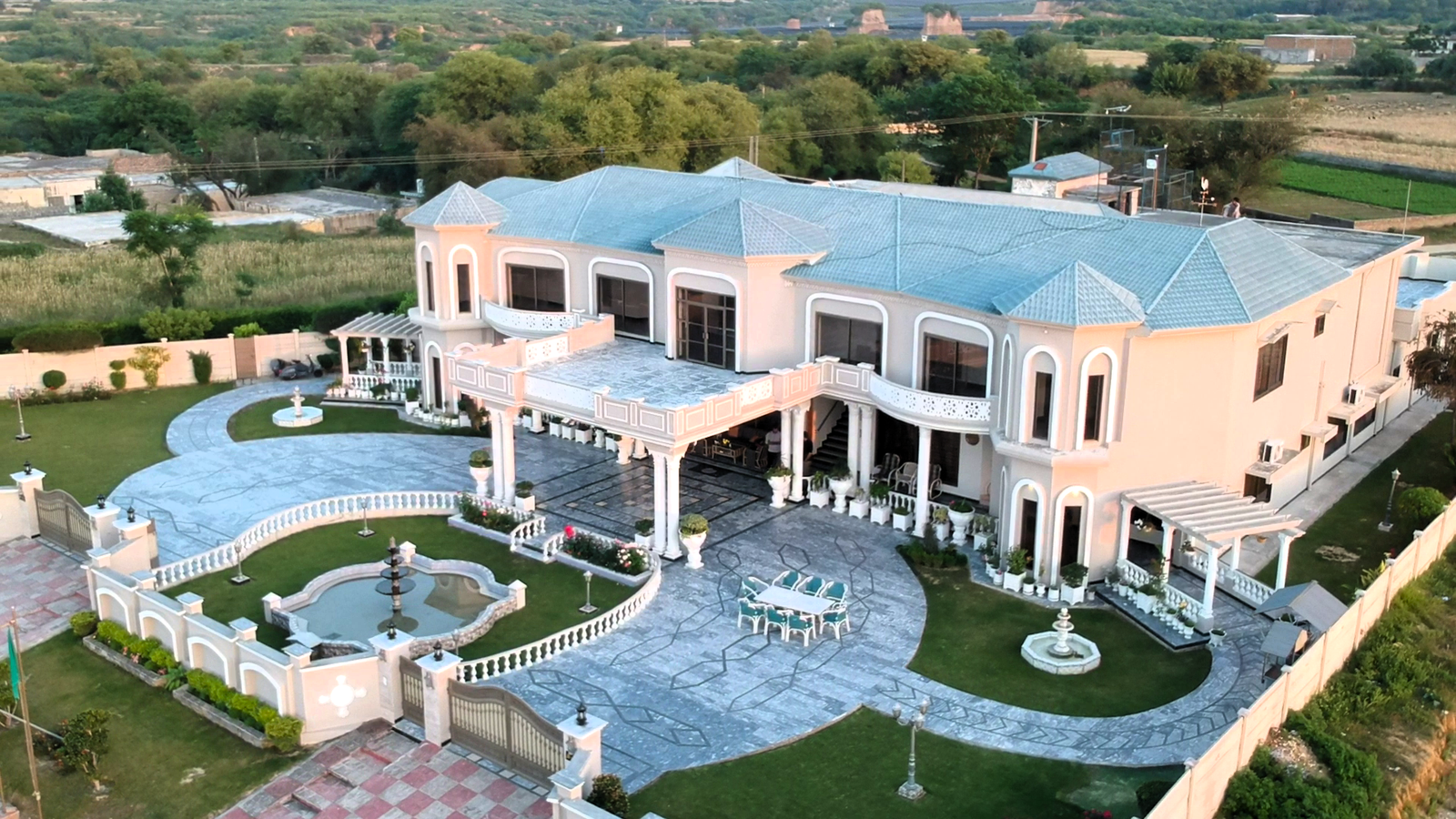 VISUAL APPEAL
- Countryside Luxury
- Elegant Fountains
- Premium Backdrops
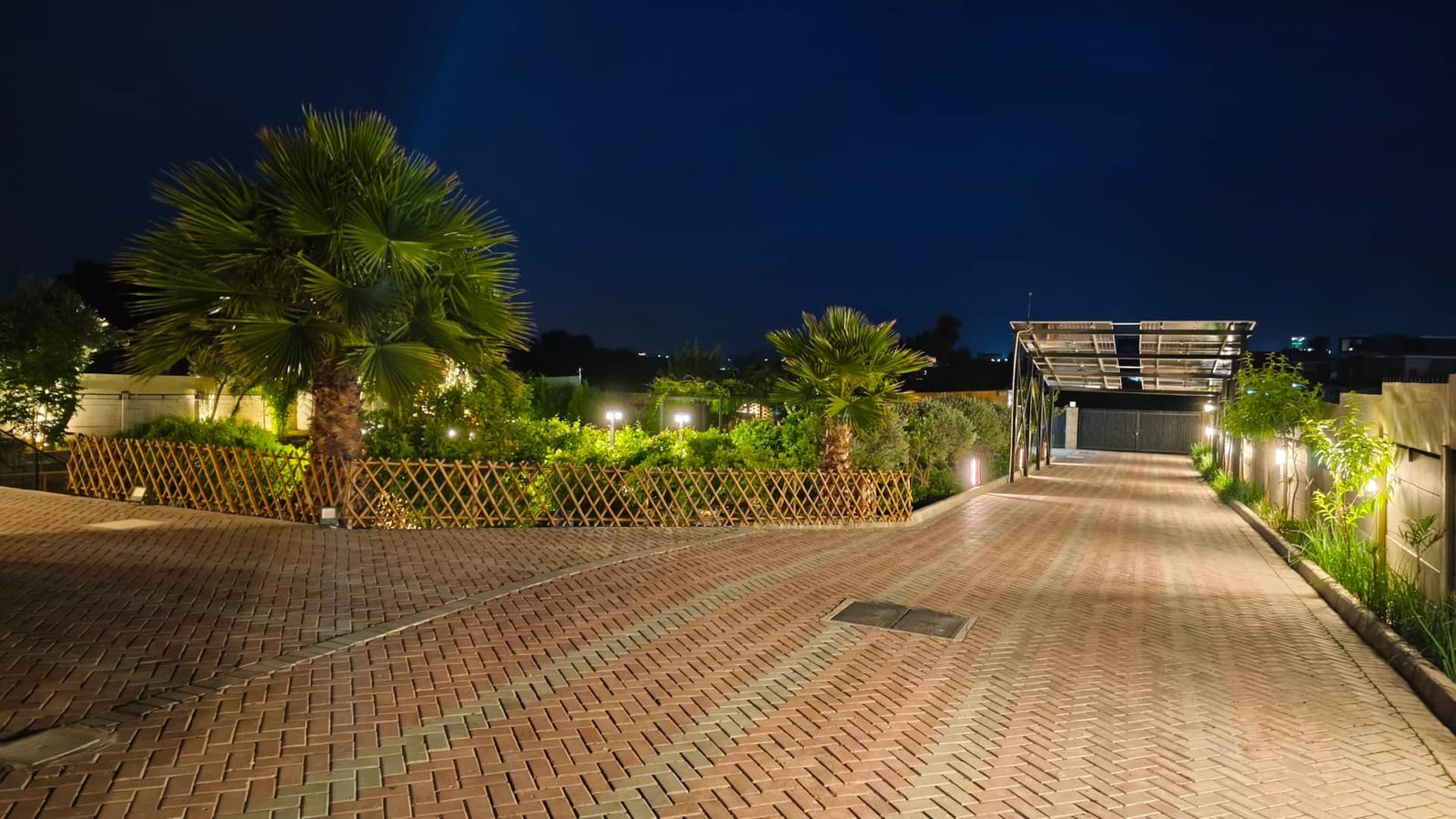 PRACTICAL FLOW
- Easy M2 Access
- 3 Master Suites
- Spacious Lounge
- Expandable Venue
Compare visual appeal with arrival, guest movement, service access and backup space before booking.
During a site visit or virtual walkthrough, review these areas in sequence:
- Arrival, security check and vehicle drop-off.
- Guest entrance, reception point and movement into the main event area.
- Ceremony, stage or presentation sightlines from different seats.
- Food service, kitchen access and waste-removal route.
- Restrooms, prayer space, family rooms and accessibility for guests who need assistance.
- Power supply, backup power, sound limits and technical setup locations.
- Indoor backup space and safe exit routes.
Chapter 06
Understand What Each Property Type Does Best
Different settings solve different planning problems. The best choice depends on privacy, guest count, event style, operational needs and whether accommodation is part of the plan.
Private villas
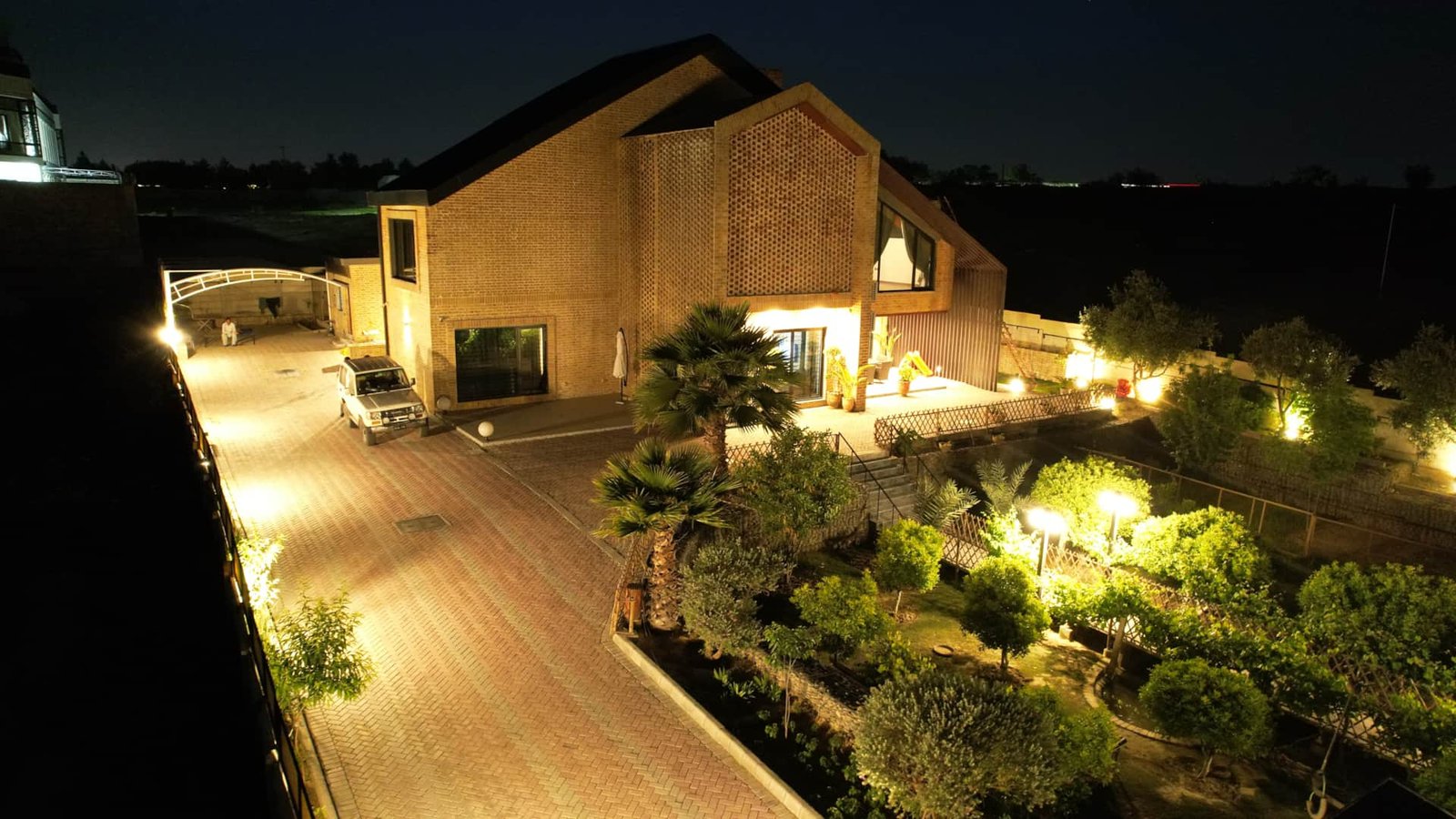
Private villas suit intimate weddings, nikkahs, birthdays, family dinners and leadership meetings. Connected indoor and outdoor areas create a personal setting and may include bedrooms or family rooms. Before booking, confirm parking, guest circulation, neighbourhood rules and which spaces are included.
Farmhouses & private lawns
Farmhouses and private lawns suit larger gatherings, open-air décor, children’s activities and brand installations. Flexible layouts offer greater visual freedom, but careful planning is needed for weather, flooring, lighting, restrooms, parking, backup power and catering access.
Heritage homes
Heritage homes and distinctive architectural properties give an event a strong identity with less decorative work. They can create a memorable atmosphere, but vendors must follow property rules. Confirm loading limits, installation permissions, protected areas, access routes and where décor or technical teams may operate.
Banquet halls & hotels
Banquet halls and hotels are practical when predictable service, built-in furniture, central access and an indoor environment are priorities. They may offer less privacy and flexibility, with fixed catering or décor rules. Compare these limitations with your event requirements instead of selecting a venue type by appearance alone.
Which Property Type Fits Your Event?
Compare privacy, guest count, event style and operations.
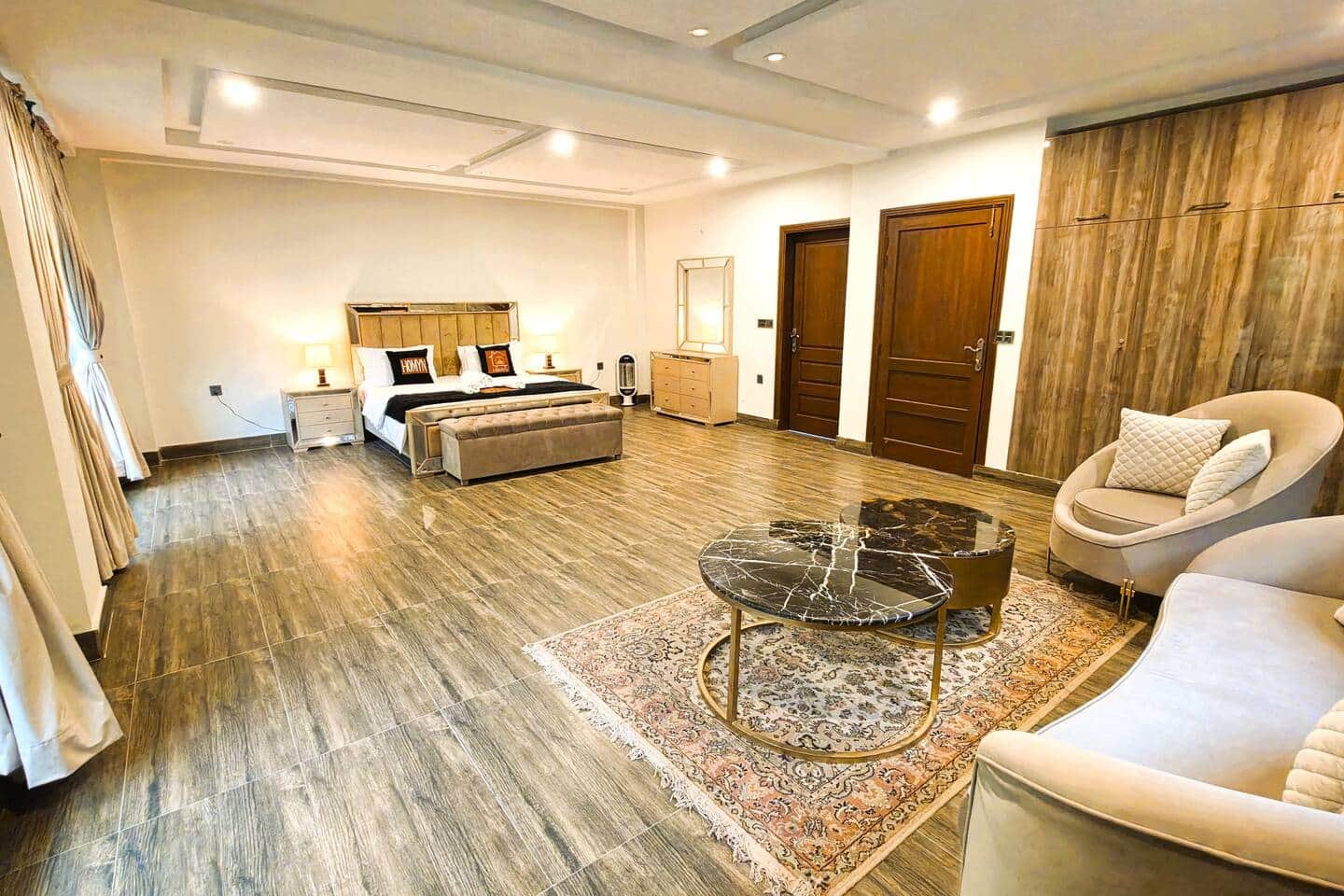 HERITAGE HOME
Built-in Character
Suitable for intimate weddings, executive dinners and styled shoots.
VIEW RETREAT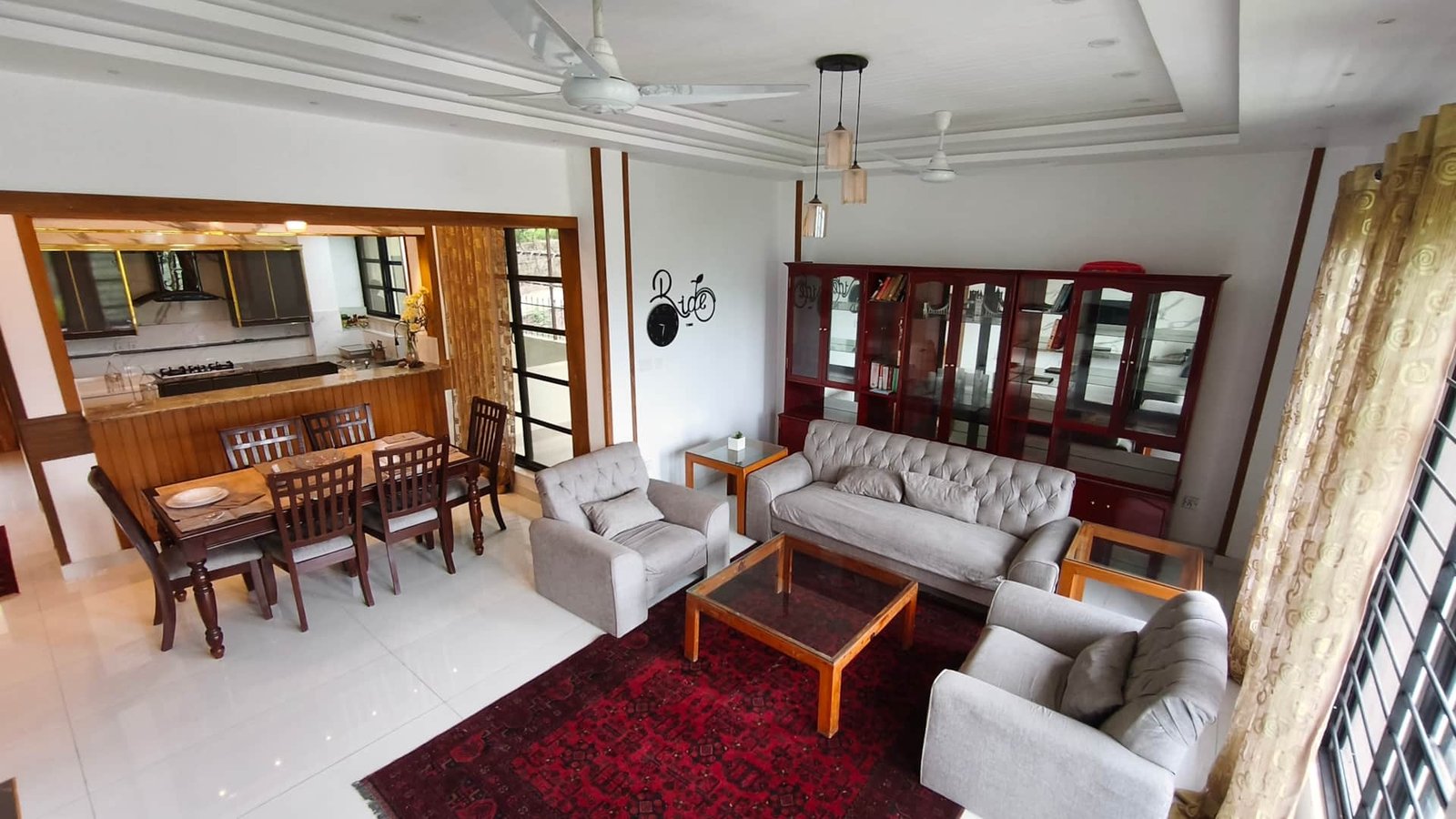 PRIVATE VILLA
Indoor + Outdoor Flexibility
Useful for nikkahs, birthdays, family events and private retreats.
BOOK PRIVATE VILLA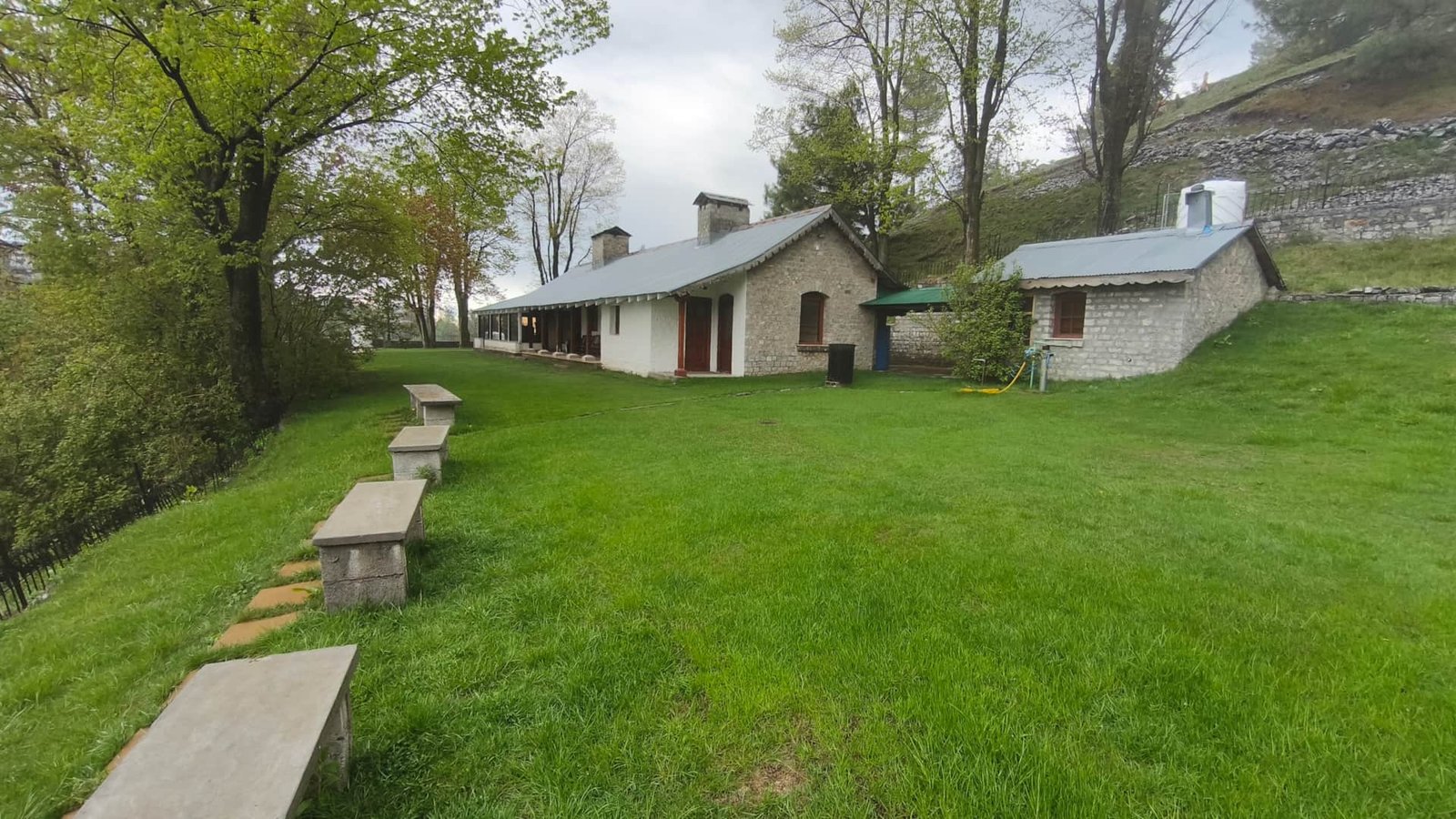 FARMHOUSE & LAWN
Compare visual appeal with arrival, guest movement, service access and backup space before booking.
Chapter 07
Match the Space to the Event Type
A venue should be evaluated differently for each event. A lawn that works beautifully for a mehndi may not be suitable for a presentation-heavy corporate launch. A quiet villa ideal for a family nikkah may not support a large baraat arrival. Use event-specific requirements during shortlisting.
Weddings
For weddings, nikkahs and mehndi functions, confirm family privacy, preparation rooms, stage sightlines, food service and photography locations. Plan family movement between spaces and, for multi-day events, arrange storage, vendor access and suitable rest areas.
Birthdays
For birthdays and anniversaries, consider the age range and comfort of every guest. Children’s events may need a secure activity zone, clear boundaries and easy restroom access. Adult celebrations may focus on dining, music, lighting and relaxed social seating.
Corporate
For corporate events, dinners and launches, confirm technical needs in writing. Check screens, power, Wi-Fi, microphones, branding and registration. Include a quiet organiser area and ensure the layout supports presentations.
See how guest count changes the venue shortlist.
Venue guide
How to Choose an Event Venue in Pakistan
Budget guide
Event Budget Planning Without Hidden Costs
Comparison
Farmhouse vs Banquet Hall
Overseas guide
Plan an Event in Pakistan from Overseas
Compare visual appeal with arrival, guest movement, service access and backup space before booking.
Chapter 08
Plan Accommodation Alongside the Event
Accommodation is often treated as a separate task, even when it directly affects the event schedule. Out-of-city relatives, speakers, leadership teams and close family may need to arrive early, change clothes, rest or stay after the function. When rooms and event space are planned together, transport becomes simpler and the event feels less fragmented.
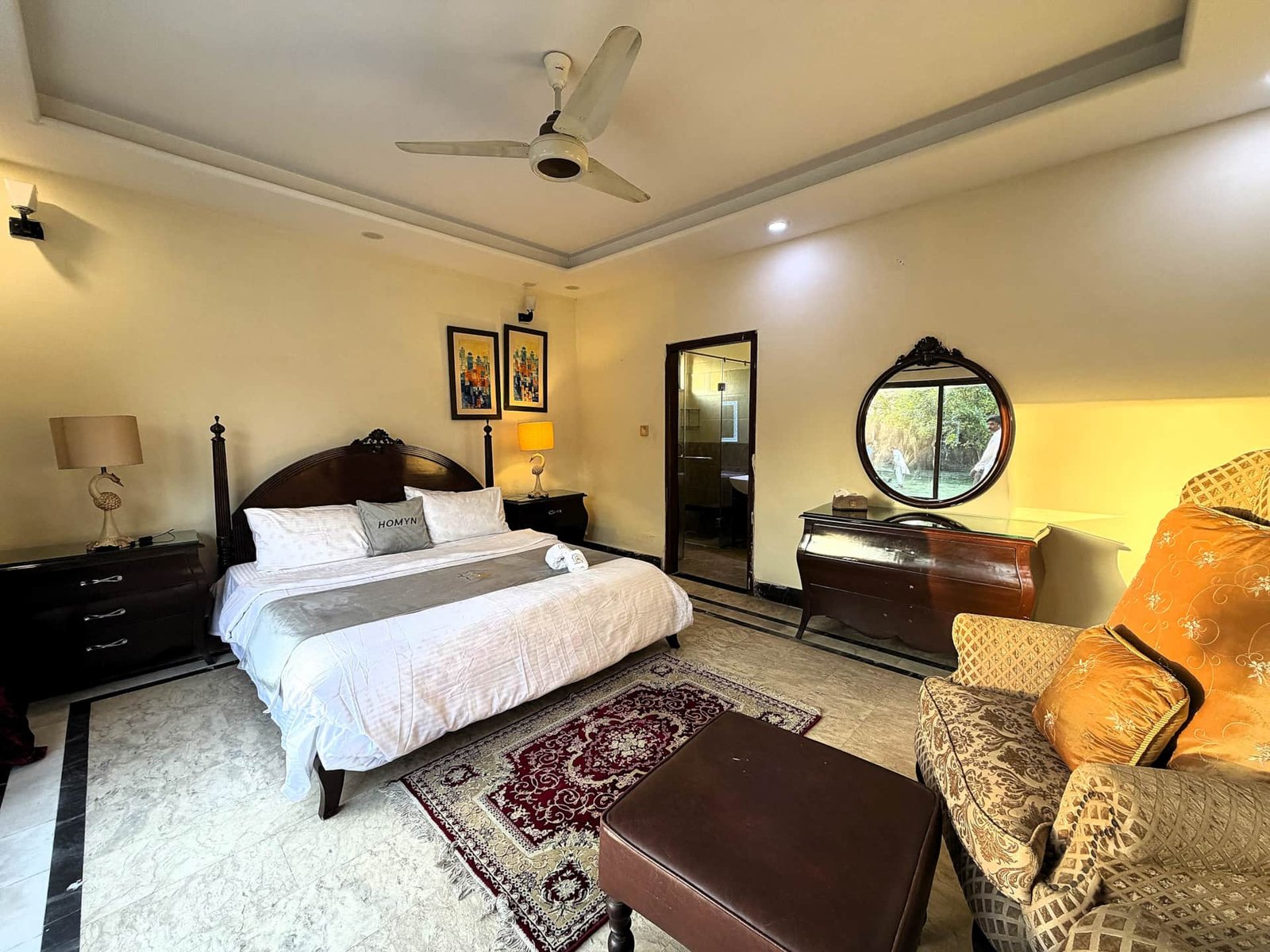
Use Homyn Stays to compare private homes and villas when travelling guests need accommodation around the event. For some groups, well-located homestays in Pakistan can provide more common space and privacy than several unrelated hotel rooms; for others, a hotel may be more practical. Open Stay with Homyn to review current options, then confirm the location, room setup, check-in terms and included services before making the stay part of the event plan.
Plan the Event and Stay Together
One coordinated itinerary can reduce travel, delays and guest stress.
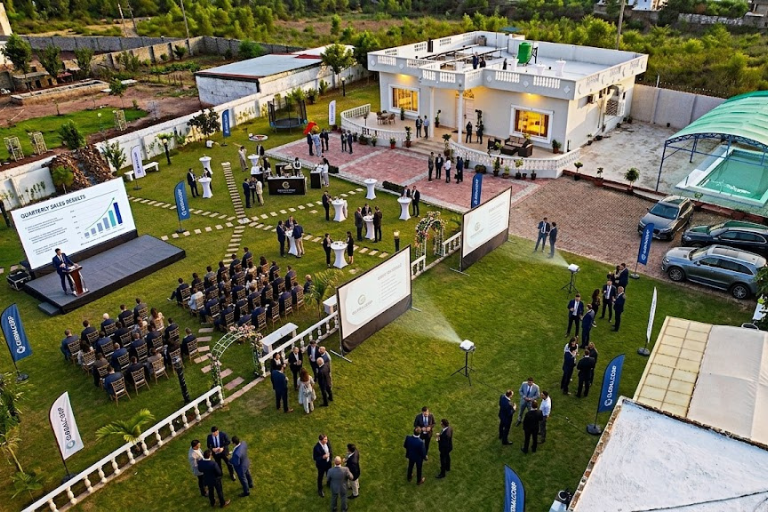 EVENT SPACE
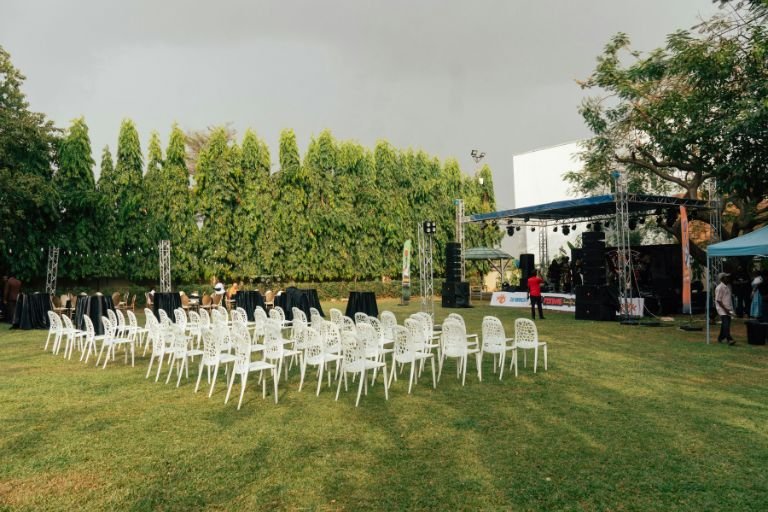 GUEST ACCOMMODATION
Guests arrive rested
Functions stay connected
Travel becomes simpler
Planning event space and guest accommodation together can simplify multi-day functions and out-of-city logistics.
Capacity check
Before confirming accommodation, record the number of bedrooms, actual sleeping capacity, bed configuration, check-in and check-out times, housekeeping arrangements, kitchen access, driver accommodation, parking and quiet hours. Event capacity and overnight capacity are not the same. A property may host a large gathering but sleep only a small number of guests.
Compare stays near the event before transport becomes complicated.
Use the stay collection as a planning reference, then confirm room capacity and included services in writing.
Chapter 09
Planning an Event in Pakistan from Overseas
Remote planning creates a different kind of risk: not a lack of ideas, but a lack of first-hand visibility. An overseas host may be comparing venues from the UAE, Saudi Arabia or the United Kingdom while relatives, vendors and properties are working on different schedules in Pakistan. The solution is a clear approval system rather than a larger WhatsApp group.
Choose one local coordinator who can attend viewings and resolve routine questions, but keep final budget and contract approval with one named decision-maker. Ask for a live video walkthrough that shows the arrival route, parking, guest entrance, event area, restrooms, kitchen or service access, backup space and any rooms included in the booking. A polished reel is useful for atmosphere; it is not a substitute for seeing how the property will function.
Keep one written event brief and one decision log. Record the latest guest estimate, approved layout, payment milestones, vendor access times, accommodation plan and any condition that could change the price. When relatives are travelling between cities or arriving from abroad, plan rooms, check-in timing and transfers alongside the event schedule rather than after the venue is booked.
Before sending a non-refundable payment, request the current quotation, cancellation terms, property rules and the name of the person authorised to confirm the booking. Exchange rates, banking arrangements and payment methods can change, so use the amount and process stated in the current written agreement rather than an old screenshot or earlier family event.
Chapter 10
Book Vendors in the Right Order
Vendor booking should follow the decisions that constrain other suppliers. Confirm the date, property and operating rules first. Then secure the services that depend most heavily on availability or the venue layout. For many events, the practical sequence is venue, catering, planning or coordination, décor and production, photography, entertainment, transport and guest support.
One written brief
Give every vendor the same written event brief. Include the date, property address, guest count, event timing, setup window, access restrictions, contact person, approved layout and venue rules. This keeps all suppliers aligned and prevents conflicting instructions during setup.
Confirm property rules
Before paying a vendor, confirm the property rules for outside caterers, cooking, open flames, installations, amplified music and heavy equipment. Clarify who will protect lawns, walls, furniture and electrical systems, and record every condition affecting cost or setup in writing.
Chapter 11
Create a One-Page Event Operations Plan
The event concept can be detailed, but the event-day control document should be simple. Create one page that the host, coordinator and lead vendors can understand quickly. It should include the event timeline, key contacts, property rules, vendor arrival sequence, guest arrival time, important family or executive movements, meal service, speeches or ceremonies, transport plan and the decision point for a weather backup.
Protect the host experience
Assign clear roles for spending, property coordination and guest support so the host can focus on welcoming guests.
Chapter 12
Questions to Ask Before Booking a Property
A good booking conversation produces specific written answers. Use the following checklist before paying a deposit:
Is the property available for the complete setup, event and breakdown period?
What guest capacity is comfortable for the proposed seated or standing layout?
Which indoor and outdoor areas are included, and which remain private or restricted?
What furniture, rooms, kitchen facilities, staff and utilities are included in the price?
Is backup power available, and are there limits on lighting, sound or production equipment?
What is the parking capacity, and is valet or traffic management required?
Are outside caterers, decorators, photographers and technical vendors allowed?
What are the rules for music, event end time, neighbourhood noise and fireworks?
Is there a confirmed weather backup for an outdoor event?
Are the entrance, pathways and restrooms suitable for elderly guests, children and people with limited mobility?
Can guests stay overnight, and what is the separate sleeping capacity?
What deposit, security amount, damage policy, cancellation terms and overtime charges apply?
Take photographs or notes during the walkthrough and request an updated quotation that reflects the final requirement. If a condition matters to the event, include it in the written confirmation. A message that says “discussed on call” is not a substitute for a clear term.
Chapter 13
Use a Planning Timeline That Matches the Event
There is no single timeline for every event. A wedding season function, major product launch or event involving international guests needs more lead time than a small birthday dinner. The following framework can be adapted to the size and complexity of the plan.
Twelve weeks
or more before
the event
- Define the outcome, budget range, guest list and preferred dates.
- Shortlist the city, property type and accommodation requirement.
- Visit or virtually inspect suitable properties and confirm the booking.
- Secure high-priority vendors whose availability affects the date.
Six to eight
weeks before
the event
- Approve the event layout, menu direction, décor concept and technical requirements.
- Confirm guest communication, transport and accommodation arrangements.
- Share written venue rules with every vendor.
Two to four
weeks before
the event
- Update attendance, seating, catering quantity and room allocation.
- Confirm parking, security, power, sound checks and weather backup.
- Create the event-day timeline and contact sheet.
Final week
- Reconfirm every supplier, payment milestone, access time and responsible person.
- Walk through the final layout and guest journey.
- Prepare emergency supplies, signage, printouts and backup copies of key contacts.
Event day
- Open the property for vendors according to the agreed sequence.
- Complete technical, safety and service checks before guests arrive.
- Keep one decision-maker available while the host focuses on guests.
Chapter 14
Common Planning Mistakes to Avoid
Booking from photographs alone. Images can show beauty but not traffic flow, noise, accessibility, power, parking or service routes.
Choosing the highest advertised capacity. Maximum occupancy is not the same as a comfortable event layout with seating, stage, food and clear walkways.
Finalising décor before the floor plan. Décor should support movement and sightlines rather than compete with them.
Assuming rooms are included. Confirm which rooms are available for preparation, family use or overnight accommodation and when access begins.
Leaving weather and power decisions until the event day. A backup plan only works when space, equipment and decision authority are arranged in advance.
Relying on verbal terms. Prices, inclusions, timings, vendor permissions, cancellation terms and damages should be documented.
Sending different instructions to different suppliers. One approved brief and one lead contact prevent avoidable conflict during setup.
Chapter 15
How Homyn Can Support the Planning Process?
Homyn’s event directory and stay platform can be used as two connected parts of the same plan. A family may need a private event space, preparation rooms for close relatives and separate accommodation for additional guests. A company may be looking for a presentation setting as well as nearby rooms for a leadership team. Considering the event property and guest stay together can simplify transport and coordination, but availability, facilities and service inclusions still need to be checked for each listing.
Start by comparing suitable properties in the Homyn event venue collection. Review Homyn Stays when accommodation is part of the brief. If the event involves out-of-city guests, several functions or unusual access requirements, contact Homyn with the date, city, event type, expected guest range, preferred layout and stay requirement. Homyn can support discovery and shortlisting; final pricing, availability, property rules and service inclusions should be confirmed in writing for the selected listing.
How Homyn Supports Your Plan
Connect venue discovery, guest stays and a clear enquiry process.
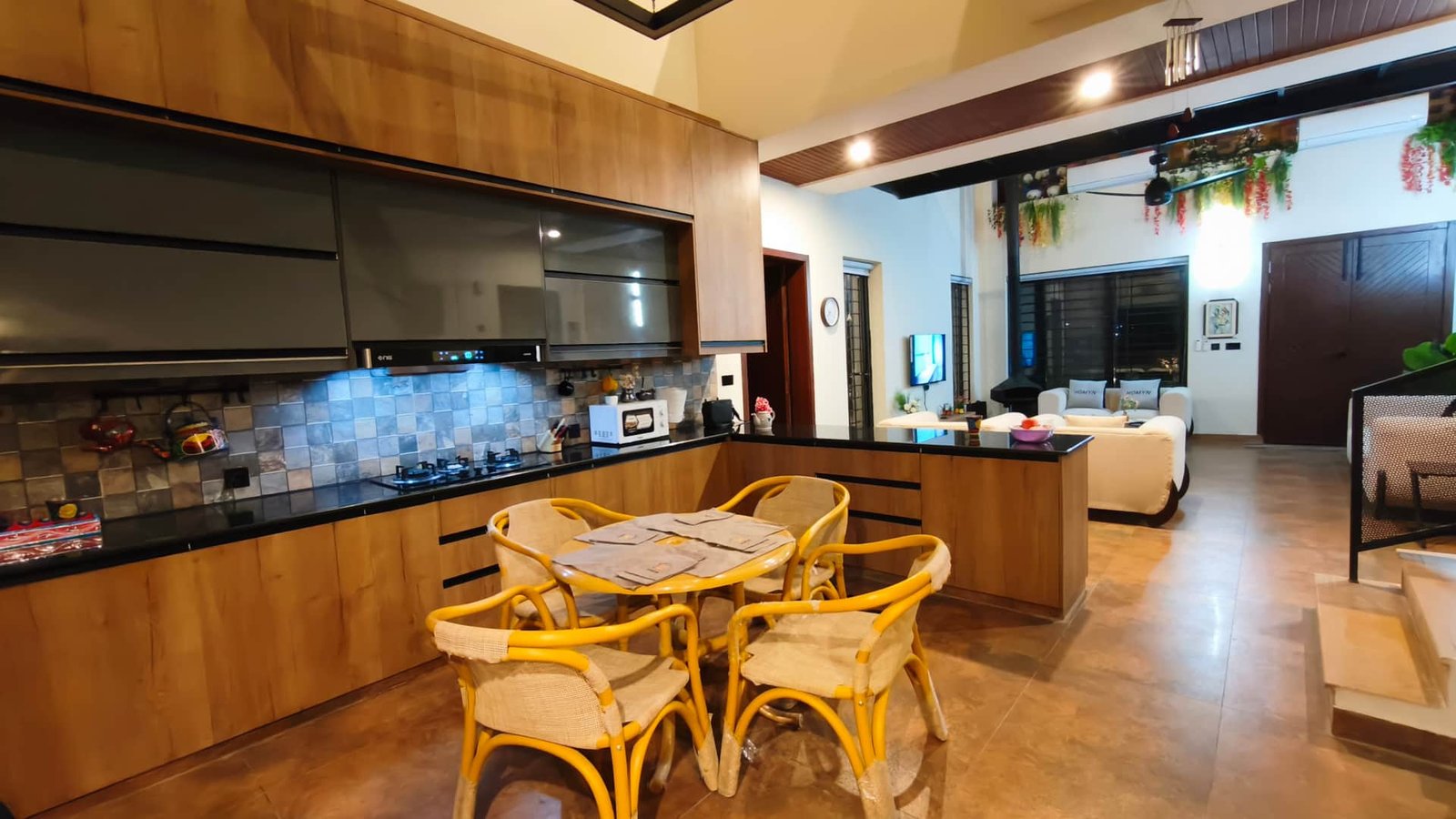
Discover Venues
Shortlist by city, event type, and size requirements.
Compare Stays
Plan guest rooms, shared spaces, and overnight comfort.
Submit One Enquiry
Share your date, guest count, and event needs easily.
Homyn connects venue discovery, suitable stays and a clear enquiry process for events with travelling guests.
Saveable checklist
Quick Event Planning Checklist
Complete these essentials before exploring and booking your event venue.